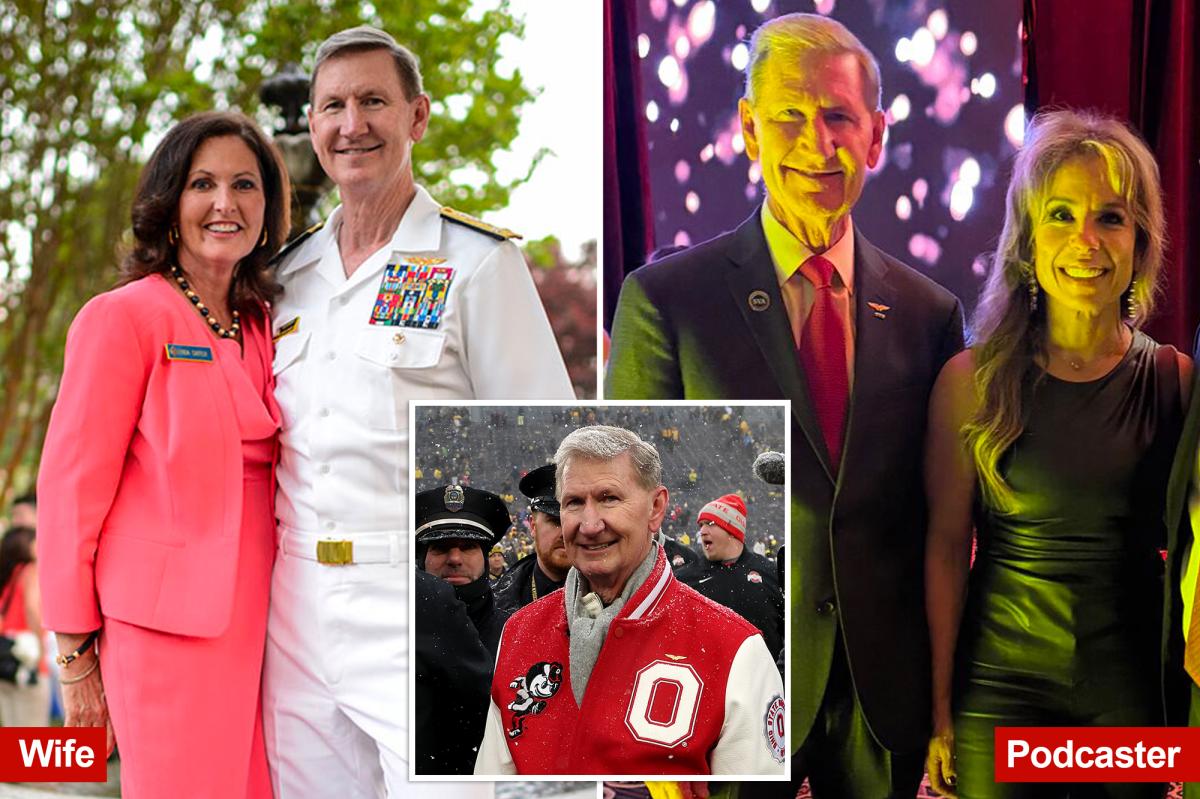
The landscape of higher education leadership was recently shaken by news emerging from Ohio State University, involving its former president, Ted Carter, and podcaster Krisanthe Vlachos. What began as a seemingly professional collaboration centered on veteran advocacy initiatives quickly spiraled into a public controversy, leading to Carter's abrupt resignation and raising questions about access, sponsorships, and ethical boundaries. The unfolding narrative surrounding Krisanthe Vlachos Ted Carter has put a spotlight on the intricacies of high-profile relationships within institutional settings and the potential for perceived conflicts of interest.
The Resignation of Ted Carter: A Question of Access
In January 2024, Ted Carter, a retired U.S. Navy vice admiral with 38 years of distinguished military service, began his tenure as president of The Ohio State University. His appointment was met with optimism, given his extensive leadership experience and background. However, his time at the helm was unexpectedly brief, concluding just months later amidst revelations of an "inappropriate relationship."
Carter's resignation was announced after he proactively informed the university's Board of Trustees about a critical issue. In a statement released by the university, Carter acknowledged, "For personal reasons, I have made the difficult decision to resign from my role as president of The Ohio State University. I disclosed to the board of trustees that I made a mistake in allowing inappropriate access to Ohio State leadership." This admission immediately sparked an emergency meeting of the board over a weekend, which culminated in the acceptance of his resignation.
The core of the issue, as stated by Carter, revolved around granting "inappropriate access." While the specifics of this access remain under scrutiny, the phrase itself implies a breach of protocol, a blurring of lines that should strictly separate personal connections from institutional leverage. For a leader of a major public university, such a lapse carries significant weight, impacting trust, governance, and the perception of fairness within the institution.
Krisanthe Vlachos: From Veteran Advocate to Scandal's Centerpiece
At the heart of the "inappropriate access" revelation stands Krisanthe Vlachos, a name that swiftly transitioned from being known primarily within veteran advocacy circles to national headlines. Vlachos is the founder and host of The Callout Podcast, launched in 2020 with a commendable mission: to empower military veterans transitioning into civilian life. The podcast focuses on critical issues such as employment, connecting former service members with opportunities in high-demand sectors like infrastructure, energy, and utilities.
Beyond her podcasting efforts, Vlachos also operates VetEarnsUSA LLC, a company dedicated to organizing initiatives aimed at veteran employment. This includes hosting networking events, conferences, and programs designed to bridge the gap between skilled veterans and employers. Both The Callout Podcast and VetEarnsUSA LLC align with vital community needs, addressing the often-challenging transition faced by those who have served. For more details on her ventures, read Krisanthe Vlachos: Podcast, VetEarnsUSA & OSU Controversy.
The controversy arose as details emerged about the extent of her connection with Ted Carter. Social media posts and event photos depicted Vlachos and Carter together at various veteran-focused events, including the Student Veterans of America national conference. In one notable online post, Vlachos referred to Carter as her "dear friend and mentor," hinting at a relationship that extended beyond typical professional collaborations. It's this perceived closeness and the potential for it to influence institutional decisions that became a central point of concern.
The Role of Sponsorships and Appearances: JobsOhio & Beyond
The intertwining professional and personal threads between Ted Carter and Krisanthe Vlachos became particularly visible through their public engagements and the financial backing of her initiatives. Carter's involvement with The Callout Podcast was substantial, appearing in nine of the 14 video episodes released in the year of the controversy. Such frequent appearances by a university president on an external podcast are unusual and suggest a deep level of engagement that went beyond a casual interview.
A key aspect of this connection involved JobsOhio, the state's private non-profit economic development corporation. JobsOhio confirmed that The Callout Podcast had received sponsorship support through its outreach efforts to military communities. In a statement, JobsOhio clarified its position: “JobsOhio is aware Ted Carter resigned this morning as President of The Ohio State University and that this situation is possibly connected to a relationship between him and the host of a podcast for veterans, which we sponsored.” The organization emphasized that its sponsorship had undergone a "standard and rigorous legal process."
While JobsOhio maintains its process was legitimate, the optics of a state economic development entity sponsoring a podcast hosted by someone with an "inappropriate relationship" with a university president are undeniably problematic. This situation highlights the importance of not just legal compliance, but also ethical considerations and the perception of undue influence. The podcast and VetEarnsUSA LLC were also involved in events tied to military communities, including a performance hosted at Ohio State in 2025 titled Last Out: Elegy of a Green Beret, further solidifying the connections to university resources and platforms. For a deeper dive into these connections, refer to Krisanthe Vlachos Named: Inside Ted Carter's OSU Scandal.
Navigating Institutional Relationships: A Call for Transparency
The Krisanthe Vlachos Ted Carter scandal serves as a potent reminder of the complex ethical landscape that leaders of public institutions must navigate. Here are some key takeaways and actionable insights for maintaining integrity:
- Clear Policies: Institutions must have robust, unambiguous policies regarding relationships between leadership and external parties, particularly concerning conflicts of interest and the use of institutional resources.
- Transparency is Paramount: All dealings that could potentially be perceived as conflicts of interest should be disclosed openly and reviewed by independent committees. This includes sponsorships, partnerships, and public endorsements.
- Due Diligence: Organizations funding external projects, like JobsOhio, must not only adhere to legal processes but also conduct thorough due diligence that includes evaluating the ethical implications of the relationships involved.
- Leadership Accountability: High-ranking officials, especially those overseeing public trust, must hold themselves to the highest ethical standards, understanding that personal relationships can inadvertently, or intentionally, create an impression of favoritism or impropriety.
- Distinguish Personal from Professional: Maintaining a clear distinction between personal friendships and professional responsibilities is crucial. Any instance where one could influence the other warrants immediate and transparent disclosure.
Broader Implications: Upholding Institutional Integrity
The fallout from the OSU scandal extends beyond the immediate parties involved. It raises significant questions about institutional governance, the vetting process for high-level appointments, and the mechanisms in place to prevent misuse of university resources or influence. For Ohio State University, a respected public institution, the incident necessitated swift action to uphold its integrity and reassure its community – students, faculty, staff, alumni, and the broader public – that its leadership operates with unwavering ethical standards.
This situation underscores the delicate balance required when public figures engage in external collaborations, even those with noble intentions like supporting veterans. The very nature of a university president's role entails immense power and influence, making any perceived "inappropriate access" a serious concern that can erode public trust and divert resources from the institution's primary mission.
The resignation of Ted Carter and the subsequent identification of Krisanthe Vlachos have cast a shadow over Ohio State University, prompting a critical examination of how connections, sponsorships, and access are managed at the highest levels. While Krisanthe Vlachos's efforts in veteran advocacy are widely recognized for their merit, the controversy surrounding her relationship with the former OSU president highlights the persistent challenges in maintaining strict ethical boundaries in high-profile roles. The full scope of the "inappropriate access" and its impact on Ohio State University continue to be areas of public interest, serving as a cautionary tale for institutional leadership everywhere regarding the critical importance of transparency, accountability, and ethical conduct.